
7 days · Kilimanjaro
Kilimanjaro — Lemosho Route, 7 Days
The same scenic western approach as our eight-day Lemosho, compressed by one day. Still one of the strongest routes on the mountain if your dates are tight.
Is this trip for you?
Trip type
Private expedition
Your own guides, cook and porters, on your own dates. We do not merge you into someone else's group, which means the pace is set by your party and nobody else's summit night.
Ages
10 and over
Kilimanjaro National Park sets a minimum age of ten. Beyond that we go on how you answer our health questions rather than on your age, and we may ask for a doctor's note first.
Fitness
Good general fitness
No technical climbing and no ropes on any route we run. What it asks for is five to eight hours of walking a day for a week, and one very long night. Three months of hill walking beforehand is worth more than any gym programme.
Group size: Private party, with guides, a cook and porters sized to it
Day by day.
-
1
Londorossi Gate to Big Tree Camp
Picked up around 08:00 and driven to Londorossi Gate on the western side of the mountain. After registration we climb steadily through the forests of the Lemosho Glades to Big Tree Camp at 2,780 m.
- Altitude
- Londorossi Gate 2,385 m → Big Tree Camp 2,780 m
- Distance
- 7 km / 4.3 mi
- Walking
- 4 hours
- Habitat
- Rainforest
- Meals
- Lunch and dinner
-
2
Big Tree Camp to Shira 2
The long day of the route. We cross the Shira Plateau through Shira 1, where Kibo often stands above the cloud, and carry on to Shira 2 at 3,900 m with the Northern Icefields in view. A lot of ground and a reasonable amount of height.
- Altitude
- Big Tree Camp 2,780 m → Shira 2 3,900 m
- Distance
- 17.4 km / 10.8 mi
- Walking
- 9 to 11 hours
- Habitat
- Rainforest onto the Shira Plateau
- Meals
- Breakfast, lunch and dinner
-
3
Shira 2 to Barranco, via the Lava Tower
Into the upland desert beneath the glaciers of the Western Breach, up to the Lava Tower at 4,640 m for lunch, then a steep descent to Barranco Camp at 3,960 m in the base of the Great Barranco valley.
- Altitude
- Shira 2 3,900 m → Lava Tower 4,640 m → Barranco 3,960 m
- Distance
- 10 km / 6.2 mi
- Walking
- 7 hours
- Habitat
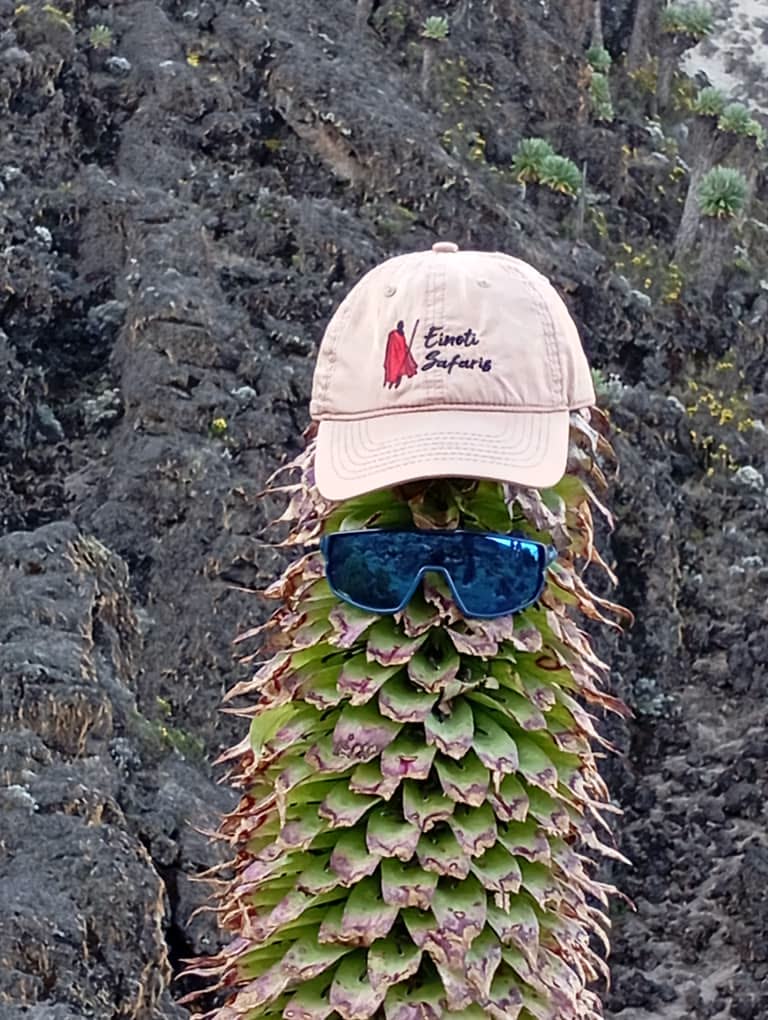
- Upland desert, then giant senecio
- Meals
- Breakfast, lunch and dinner
-
4
Barranco to Karanga
The Barranco Wall in the morning, a long tiring scramble rather than a technical climb, then under the Heim and Kersten glaciers to Karanga Camp at 3,963 m.
- Altitude
- Barranco 3,960 m → Karanga 3,963 m
- Distance
- 5.5 km / 3.4 mi
- Walking
- 5 hours
- Habitat
- Alpine desert
- Meals
- Breakfast, lunch and dinner
-
5
Karanga to Barafu
A short, steep crossing of the scree to Barafu Camp at 4,640 m. An early dinner and what sleep you can get before a midnight start.
- Altitude
- Karanga 3,963 m → Barafu 4,640 m
- Distance
- 3 km / 1.9 mi
- Walking
- 3 hours
- Habitat
- Scree and alpine desert
- Meals
- Breakfast, lunch and dinner
-
6
Summit day, then Mweka Camp
Midnight away, four to five hours of scree to Stella Point at 5,739 m for sunrise, then an hour along the rim to Uhuru Peak at 5,895 m. Down to Barafu for breakfast and on to Mweka Camp at 3,100 m.
- Altitude
- Barafu 4,640 m → Uhuru Peak 5,895 m → Mweka Camp 3,100 m
- Distance
- 18 km / 11.2 mi
- Walking
- 13 to 15 hours
- Habitat
- Arctic summit zone, then moorland
- Meals
- Breakfast, lunch and dinner
-
7
Mweka Camp to Mweka Gate
Down through the rainforest to Mweka Gate at 1,630 m, certificates, and the drive back to Moshi.
- Altitude
- Mweka Camp 3,100 m → Mweka Gate 1,630 m
- Distance
- 9.1 km / 5.7 mi
- Walking
- 3 hours
- Habitat
- Rainforest
- Meals
- Breakfast
Where you sleep.
On the mountain
Three-season mountain tents, sleeping mats, and a mess tent with a table and chairs. Three meals a day cooked on the mountain, and filtered water throughout. Marangu is the exception: it uses the park's huts throughout.
Before and after
Bed and breakfast in Moshi the night before the climb and the night you come down, with hot water, laundry and somewhere to leave the luggage you are not carrying up.
Upgrades
A portable flush toilet with its own tent is US$70 per toilet and tent for the climb, and is the upgrade most parties are glad they took. Single tents and a walk-in tent with a camp bed are available on request, as is an extra night in Moshi at either end, which most climbers who fly in the same day end up wishing they had booked. We also hire out clothing, mountain kit and sleeping bags - though we would rather you brought your own boots.
We book against availability for your dates rather than naming a property we may not be able to get you into. Your written quotation names every lodge and camp before you pay anything.
What is included
- Park fees and camping fees
- 18% VAT on tour fees and services
- Three-season mountain tents
- Transport to and from the mountain gate
- Professional mountain guides, a cook and porters
- Three meals a day on the mountain
- Filtered water throughout the trek
- Accommodation before and after the trek
- Fair wages for the mountain crew, at the rates set by Kilimanjaro National Park (KINAPA) and the Kilimanjaro Association of Tour Operators (KIATO)
- Private airport transfers both ways
Not included
- Flights
- Visa fees
- Travel insurance
- Sleeping bag
- Tips for the mountain crew
- Items of a personal nature
- Alcoholic and soft drinks
- Laundry services
- A doctor travelling with the group
- A portable flush toilet with its own tent, which is US$70 per toilet and tent
When to go.
January to mid-March — warm and clear
The warmest climbing window, with clear mornings and a good chance of snow on the summit cone. Busy, but less so than the northern-hemisphere summer.
June to October — cold, dry and busy
The most reliable weather of the year and the highest traffic on the mountain. Nights are the coldest, which is what a proper sleeping bag is for.
Late March to May, and November
The rainy months. We do run climbs then, on the northern and western routes that sit in the mountain's rain shadow, but you should expect wet forest days and we will say so plainly before you book.
Questions about this trip.
Is seven days on Lemosho enough?
It is a strong route and plenty of people summit on it. It is one night less acclimatisation than we would choose for a first climb at altitude, and we say so plainly rather than sell you the shorter trip quietly.
Who should book this instead of the eight-day?
Trekkers who have been above 4,000 m before and know how they respond, and people whose dates genuinely will not stretch.
How long is day two?
Seven to eight hours, sixteen kilometres, out of the forest and across the whole Shira Plateau. It is the longest walking day before the summit.
Can I add the extra night later?
Up to a point — park permits are issued per night, so it depends how close to departure you ask. Earlier is always cheaper and simpler.
On this route
Where you will be.

Compare
Other kilimanjaro journeys.

Kilimanjaro — Lemosho Route, 8 Days
The route we recommend most often. Eight days on Lemosho gives the best acclimatisation profile on the mountain and, with it, the highest chance of standing on Uhuru Peak.
- The strongest acclimatisation profile we run
- Quiet western approach through rainforest
- Shira Plateau and the Lava Tower
Pricing on request View itinerary
Kilimanjaro — Machame Route, 7 Days
The Whiskey Route: steeper than Lemosho, busier, and widely considered the most scenic way up the mountain. Seven days gives it the acclimatisation it needs.
- The most scenic standard route
- Shira Plateau and Lava Tower
- Barranco Wall
Pricing on request View itinerary
Kilimanjaro — Machame Route, 6 Days
Machame without the Karanga rest day. It works, but it asks more of you, and we will say so if we think you should take the seven-day version instead.
- The shortest sensible Machame
- Lava Tower acclimatisation day
- Barranco Wall
Pricing on request View itinerary
Plan it with us
Make this itinerary yours.
Add days, drop a park, change the pace. This is a starting point, not a fixed departure.